
NXP BGA2801: A Comprehensive Overview of its Architecture and Applications
The relentless drive towards higher levels of integration and performance in RF (Radio Frequency) design has led to the development of sophisticated system-in-package (SiP) solutions. Among these, the NXP BGA2801 stands out as a highly integrated, high-gain low-noise amplifier (LNA) module designed to address the demanding requirements of modern wireless infrastructure. This article provides a comprehensive overview of its internal architecture and its diverse applications.
Architectural Design and Key Features
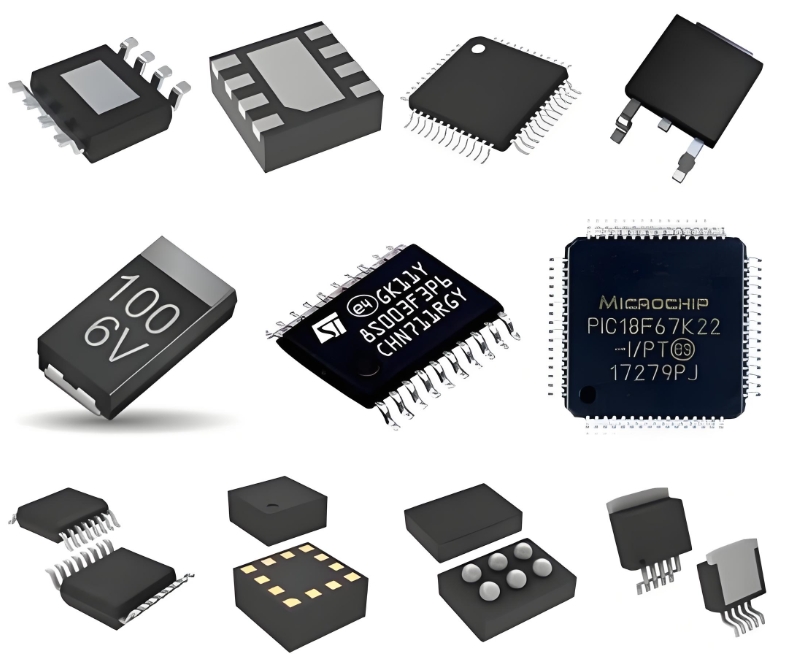
The BGA2801 is not a simple discrete transistor; it is a complex, multi-chip module engineered for superior performance and ease of use. Its architecture integrates several key components into a single, compact 1.5 x 1.5 x 0.62 mm 6-pin wafer-level chip-scale package (WLCSP).
At its core, the module features a high-performance low-noise amplifier constructed using advanced Gallium Arsenide (GaAs) pseudomorphic high-electron-mobility transistor (pHEMT) technology. This foundation is critical for achieving its exceptional noise figure and high linearity. However, the integration goes much further. The module also includes:
Input and Output Matching Networks: These are fully integrated within the package, eliminating the need for external matching components. This significantly simplifies PCB design, reduces the bill of materials (BOM), and minimizes board space.
DC-Blocking Capacitors: Both the input and output feature integrated DC-blocking capacitors, further reducing external part count.
An Active Bias Circuit: This ensures stable and consistent performance over temperature and process variations, enhancing the reliability of the design.
The key performance characteristics that result from this architecture are impressive. The BGA2801 operates in a frequency range from 400 MHz to 2700 MHz, making it exceptionally versatile. It boasts an ultra-low noise figure of just 0.6 dB at 900 MHz, which is paramount for maximizing receiver sensitivity. Simultaneously, it delivers a high gain of over 19 dB and excellent linearity with an output third-order intercept point (OIP3) of +36 dBm. This combination of low noise and high linearity is a hallmark of its advanced design.
Primary Applications
The architectural advantages of the BGA2801 make it an ideal solution for a wide array of wireless applications, particularly where signal integrity is paramount. Its primary application domains include:
Cellular Infrastructure: It is extensively used as the first-stage LNA in 4G LTE and 5NR base stations, including massive MIMO (Multiple Input, Multiple Output) systems and small cells. Its low noise figure directly improves the uplink sensitivity of the base station, extending cell coverage and capacity.
Public Safety and Professional Mobile Radio (PMR): Systems used by emergency services require robust and sensitive receivers. The BGA2801 is ideal for these applications within its frequency band.
General Wireless Systems: It finds use in a broad spectrum of equipment, including repeaters, boosters, and any general-purpose RF front-end that requires high gain with minimal added noise.
ICGOOODFIND
The NXP BGA2801 represents a pinnacle of RF integration, masterfully combining a high-performance GaAs pHEMT LNA with essential matching and biasing circuitry into a minuscule package. Its exceptional blend of an ultra-low noise figure and high linearity addresses the critical challenges in modern receiver design. By dramatically reducing external component count and simplifying layout, it accelerates time-to-market for designers working on next-generation cellular infrastructure and other demanding wireless applications, solidifying its position as a critical component in the RF signal chain.
Keywords: Low-Noise Amplifier (LNA), NXP BGA2801, Noise Figure, System-in-Package (SiP), RF Integration

