
Microchip PIC18K22-I/SO 8-bit Microcontroller: Features and Design Considerations
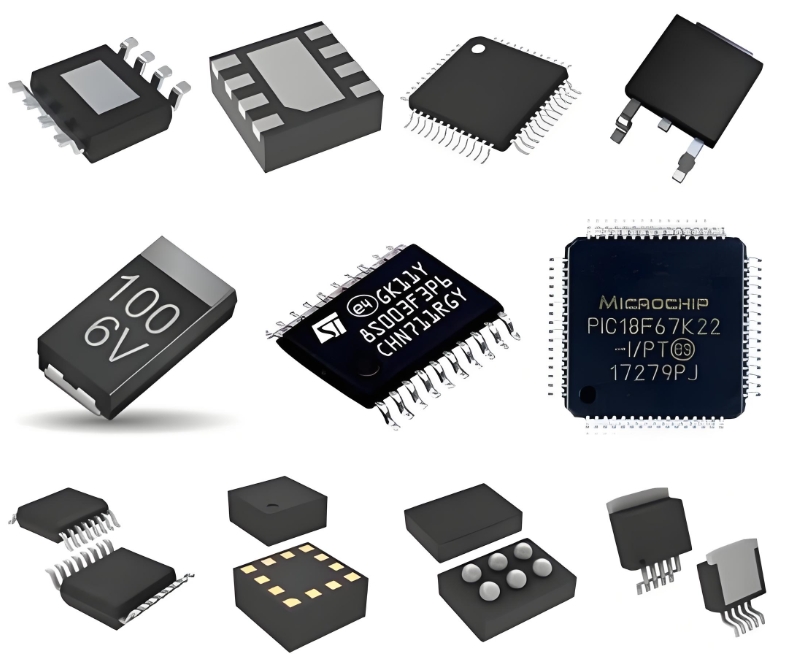
The Microchip PIC18F26K22-I/SO stands as a robust and versatile 8-bit microcontroller within the extensive PIC18K family. Housed in a 28-pin SOIC (Small Outline Integrated Circuit) package, this device is engineered for applications demanding a balance of performance, power efficiency, and peripheral integration. Its design is particularly suited for automotive, industrial, consumer, and embedded control systems where reliability is paramount.
A core feature of this microcontroller is its enhanced nanoWatt XLP technology, which enables extremely low power consumption during active, idle, and sleep modes. This makes it an ideal candidate for battery-powered or energy-harvesting applications where extending operational life is a critical design goal. The PIC18F26K22 operates across a wide voltage range (2V to 5.5V), providing flexibility in interfacing with various components and sensors.
At the heart of its performance is a high-speed core capable of executing instructions at up to 64 MHz, achieving 16 MIPS (Million Instructions Per Second). This is complemented by a suite of advanced peripherals, including:
Multiple Communication Interfaces: It features EUSART, SPI, and I2C modules, facilitating seamless communication with a vast ecosystem of sensors, memory chips, and other peripherals.
Analog Capabilities: A 10-bit Analog-to-Digital Converter (ADC) with up to 13 channels allows for precise measurement of analog signals from the environment.
Timing and Control: With multiple timers/counters, including a 16-bit capability, and Complementary Waveform Generation (CWG) modules, it offers sophisticated control for motor drives and power conversion applications.
Ample Memory: It is equipped with 64 KB of flash program memory and 3896 bytes of RAM, providing sufficient space for complex firmware and data handling.
Key Design Considerations:
When integrating the PIC18F26K22-I/SO into a new design, several factors must be prioritized to ensure optimal performance and reliability.
1. Power Management: Leveraging the multiple idle and sleep modes effectively is crucial for low-power designs. Carefully managing the clock source and peripheral activation can drastically reduce overall current draw.
2. Clock Configuration: The microcontroller supports multiple clock options (internal, external oscillator, PLL). The choice significantly impacts both performance and power consumption and must be configured correctly during the initial boot process.
3. Peripheral Pin Select (PPS): This powerful feature allows for the remapping of certain peripheral functions to different I/O pins. This greatly enhances layout flexibility on the PCB, enabling more efficient and less congested board designs.
4. Robust I/O Handling: The device offers 25 I/O pins, most of which are compatible with 5V inputs, making them resilient in noisy environments. Proper implementation of internal pull-up resistors and interrupt-on-change functionality for these pins is essential for responsive user interfaces and sensor reading.
5. Development Ecosystem: Success with this MCU is heavily supported by Microchip’s mature toolchain, including the MPLAB X IDE and the PICKit™ or MPLAB ICD programmers. Familiarity with these tools accelerates debugging and programming.
ICGOOODFIND
The Microchip PIC18F26K22-I/SO is a highly capable 8-bit microcontroller that excels in low-power and control-oriented applications. Its strength lies in its exceptional peripheral integration, nanoWatt XLP power management, and design flexibility offered by the PPS module. For engineers, mastering its power modes and communication peripherals is key to unlocking its full potential and creating efficient, reliable embedded systems.
Keywords: nanoWatt XLP, Peripheral Pin Select (PPS), 8-bit Microcontroller, Low-Power Design, Communication Interfaces.

