
NXP BF820W: A Comprehensive Overview of its Architecture and Target Applications
The NXP BF820W is a sophisticated 32-bit microcontroller unit (MCU) from NXP Semiconductors, designed to address the growing demands for performance, security, and connectivity in next-generation automotive and industrial applications. As a member of the renowned S32K product family, it is built upon the robust and efficient Arm® Cortex®-M0+ core, providing a compelling blend of computational power and energy efficiency.
Architectural Deep Dive
The architecture of the BF820W is meticulously crafted for reliability and functional safety. At its heart lies the Arm Cortex-M0+ processor, running at clock speeds up to 48 MHz. This core is renowned for its high efficiency and low power consumption, making it ideal for power-sensitive embedded applications.
A key architectural highlight is its extensive memory configuration. The MCU is equipped with up to 128 KB of Flash memory and 16 KB of RAM, ensuring ample space for complex application code and data handling. The memory system is designed for reliability, featuring error-correcting code (ECC) protection to prevent data corruption—a critical requirement for automotive systems.
The peripheral set is both rich and targeted. It includes:
High-performance analog-to-digital converters (ADC) for precise sensor data acquisition.
Multiple flexible timers (PWM, FTM, PDB) essential for motor control and power management.
A comprehensive suite of communication interfaces, including LIN, SPI, I²C, and UART modules. The inclusion of a CAN-FD (Flexible Data-Rate) controller is particularly significant, enabling high-speed, reliable data exchange within vehicle networks, far surpassing the bandwidth of classic CAN.
An integrated Hardware Security Module (HSM). This dedicated co-processor is pivotal for implementing robust security measures, including cryptographic services and secure boot, protecting the system from unauthorized access and cyber threats.
Furthermore, the BF820W is designed with functional safety in mind, targeting compliance with the ISO 26262 standard for road vehicles. Its architecture incorporates safety features like memory protection units (MPU) and windowed watchdogs to help developers build systems capable of achieving ASIL-B safety integrity levels.
Target Applications
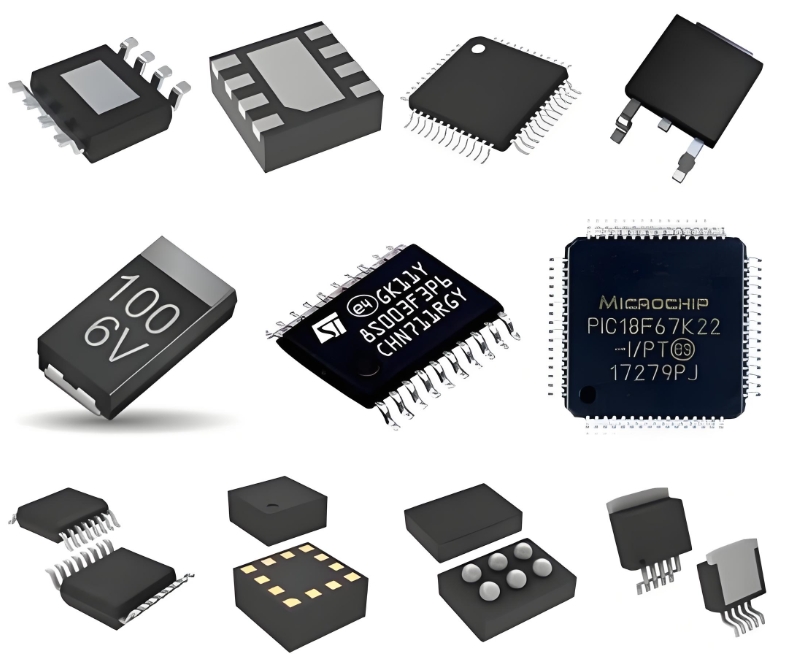
The combination of its automotive-grade qualification, functional safety features, and rich peripheral set defines the BF820W's primary target markets.
1. Automotive Body Electronics: It is perfectly suited for controlling a wide array of body control modules (BCMs), including smart junction boxes, lighting control units, and door/window modules. Its CAN-FD and LIN interfaces are standard in modern vehicle networks.
2. Motor Control Systems: The advanced PWM timers and ADC make it an excellent choice for precision control of small DC and BLDC motors found in applications like electronic throttle control, HVAC blowers, and sunroof control.
3. Industrial Automation: In the industrial space, the BF820W can be deployed in PLCs, motor drives, and intelligent sensors, where its robustness, communication capabilities, and security features are highly valued.
4. Power Management and Conversion: Its timing precision supports designs for switched-mode power supplies (SMPS) and power inverters.
ICGOOODFIND
The NXP BF820W stands out as a highly integrated and safety-conscious MCU solution. Its strength lies in its balanced architecture, which pairs the energy-efficient Arm Cortex-M0+ core with a powerful set of automotive-grade peripherals, most notably CAN-FD and an integrated HSM. This makes it an exceptional choice for developers designing next-generation automotive body electronics and industrial systems where connectivity, security, and functional safety are paramount requirements.
Keywords:
1. Arm Cortex-M0+
2. Automotive MCU
3. CAN-FD (Controller Area Network Flexible Data-Rate)
4. Functional Safety (ISO 26262)
5. Hardware Security Module (HSM)

